Planning birding trips
The thrill of finding new birds and exploring new areas in Australia starts long before we go away. I love to research our destinations for many months beforehand, planning a detailed itinerary, and I take notes as I go into a specific notebook for each trip. That way all the information is there when I need to refer to it later. I also record all findings in that same notebook as we travel. From daily bird/wildlife lists to details about the accommodation, what was good and bad and our activities of the day. It is so wonderful to be able to refer to these notes later.
I know many birders and photographers like to join birding tours and use local bird guides, but we generally prefer to develop our own itinerary and travel independently. For some areas local guides are important though and we have been on some excellent tours into restricted areas at times.
I thought I would outline in this article how I go about planning for our birding trips. My Australian Birdlist has more than 500 species on it so far (out of around 800 in Australia) and it is getting more challenging to find new species, or Lifers as we like to call them in birding circles. There are areas of Australia we have not been to yet such as the Kimberley, Christmas and Cocos Island, Norfolk Island, Cape York and the Red Centre. I have only done a few Pelagics (Seabird boat trips) so I am also missing many of the sea birds.
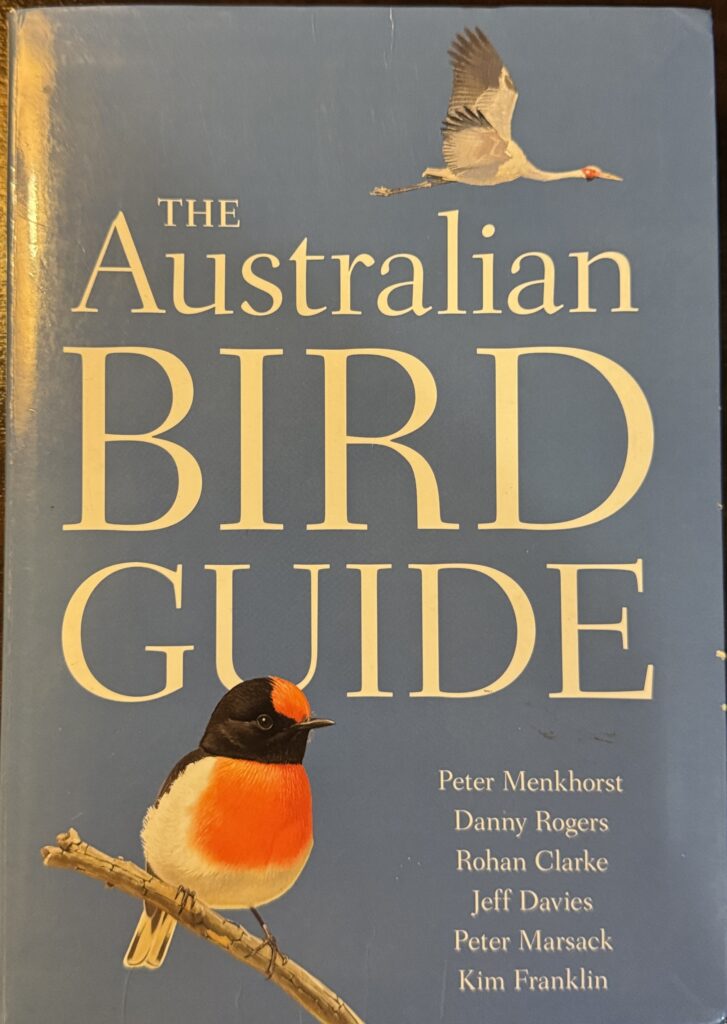
When planning for our next trip I start by exploring my many books. I will include some book covers below. I research distribution maps and birds’ seasonal migration patterns to decide where I would like to go next to find new species and explore new areas. I highly recommend these books for valuable information.
My next step is to explore bird lists and locations on eBird, Bird Data and iNaturalist. These websites are valuable for the most up to date information where books may be out of date. I keep checking lists even whilst traveling as at times birds pop up in unusual places.
I also use the phone apps: Pizzey and Knight’s “PK birds”, Michael Morcombe’s app “Aus Birds” and David Stewart’s “Stewarts Sounds”. They are well worth the money spent on them. They are helpful in the field for identifying birds, checking distinguishing details of the birds, distribution maps and to become familiar with their calls. We often hear birds long before we see them, so it is good to know what to listen out for! It is so much easier to have this on your phone than taking books with you.
I tend to use the lists on eBird to determine which places I would like to visit in each local area. We have had a pop up small caravan for the last year and this enables us to drive it to a central location, park the van up and then explore the birding areas with the car separately. Some areas are so much better than expected and we keep going back there and sometimes even though other birders have seen amazing birds in that area we didn’t have such a great day.
I get a huge thrill out of discovering new birds. It is so rewarding when my own research pays off, and it makes the whole experience even more memorable. For me the most important items are my high quality binoculars, as they will identify a bird much more easily than if I use only my camera. It is generally only once I feel comfortable with the ID that I then try to get some photos also. The photos are important references for my art works. I like to paint my own memories of all those special encounters. I also keep a nature journal for that reason with small sketches.
If anyone is looking for ideas, in the last few years we have done some great trips and these are some of my favourites:
- Far North Qld: including Townsville especially Town Common, Cairns, Etty Bay, Ingham’s Tyto wetlands, Atherton Tablelands, Georgetown, Cobbold Gorge, Cumberland Dam
- Coastal Qld: Town of 1770, Mon Repos, Airlie Beach
- SW Qld: Goondiwindi, Cunnamulla, Yowah, Thargomindah, Eromanga, Charleville
- Central Qld: Cania Gorge
- North and West Qld: Lara Wetlands near Barcaldine, Longreach, Winton, Boulia, Bedourie, Mt Isa, Cloncurry, Hughenden, Charters Towers
- NSW: Blue Mountains, Warrumbungle National Park, Capertee Valley National Park
- WA: Dryandra Woodland National Park, Cheynes Beach, Walpole, Margaret River and Perth.
To keep a good balance we also visit many local museums, galleries, Dinosaur displays, observatories, historical displays, scenic lookouts and other natural attractions.
We are so fortunate to live in this incredible country with so much wildlife and stunning scenery. There are not enough days in our lifetimes to explore all that Australia has to offer!
Esther Horton